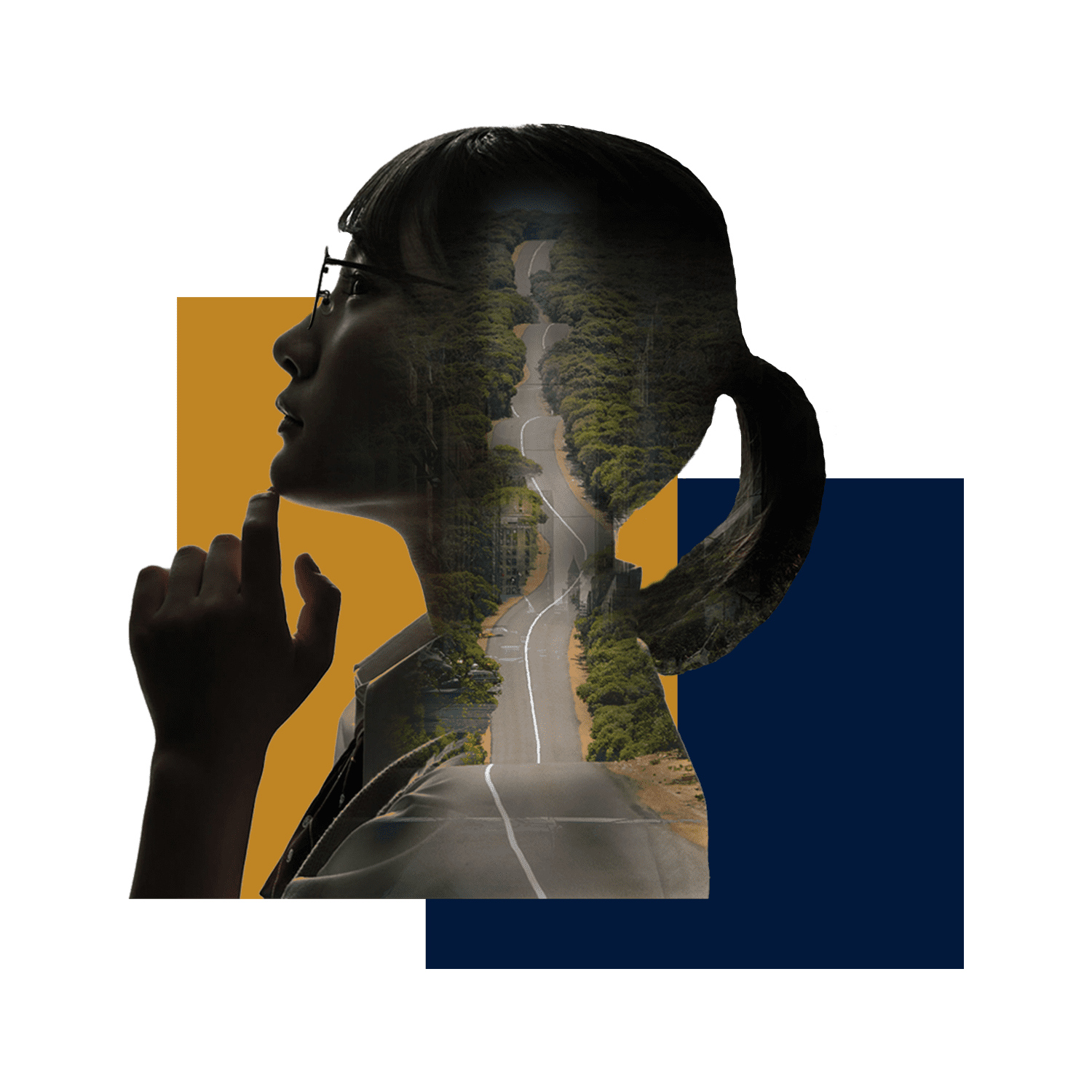
You are preparing students for a world that ended.
The career advice embedded in higher education assumes stable industries, linear progression, and lifetime employment. Those conditions disappeared thirty years ago. The frameworks remained.
Choices is curriculum that teaches students how professional life actually works now.
Career advice was designed for a world that no longer exists.
For 150 years, career success followed a predictable pattern. Get credentials. Get hired. Climb the ladder. Retire.
This was not universal wisdom. It was a specific arrangement, invented during industrialization, designed for mass employment in stable organizations.
That arrangement is over. The average graduate will hold seventeen jobs across five distinct career phases. Entire industries will emerge and collapse within a single career span. The path from education to employment to retirement has fractured into something far more complex.
Yet career services still operate on the old model. Match students to employers. Assess skills. Polish resumes. The tools have modernized. The underlying assumptions have not.
Students sense the old model is broken. They feel it.
They feel pessimistic about their professional futures despite years of preparation. They do not lack information. They lack a framework for navigating a landscape that no longer matches what they were taught to expect.
This is a skill. It can be taught. No one is teaching it.
A decision-making framework for professional life.
Choices is a 20-30 minute curriculum that gives students a decision-making framework for professional life.
Students learn that there are five fundamental structures for professional life, not two, and that each structure has trade-offs rather than rankings. They discover that their current situation is a season that will change, that small experiments reveal more than extensive planning, and that rebuilding is not failure but the actual shape of a professional life now.
They leave with judgment they will use at every professional crossroads, not just this one.
Students clarify their current situation, constraints, values, and risk tolerance.
Five fundamental ways to structure professional life, each with honest trade-offs.
Personalized insights based on what students shared about their season.
A small test to try before making major commitments.
Choices fills a gap no other tool addresses.
Career platforms connect students to opportunities.
They do not teach evaluation.
Assessments reveal traits.
They do not teach decision-making.
Coaching provides guidance.
It does not scale.
Choices is curriculum.
It transfers a framework. It works at institutional scale.
Choices addresses the problem no other tool acknowledges.
The advice itself is obsolete. Students do not need better execution of outdated frameworks. They need new frameworks built for how professional life actually works now.
Built on six years of independent research.
Choices was developed by Dr. Alina Okun following six years of independent research into workforce transformation.
The core finding: what we call "career advice" is not timeless wisdom. It is a set of assumptions from a specific historical period that no longer describes reality.
Students need new frameworks, not better execution of outdated ones.
"The traditional three-stage model of education, employment, and retirement was a historical anomaly, not a permanent truth."
See Choices in action.
Choices can be deployed through career services, embedded in courses, or licensed campus-wide. Pre- and post-assessments measure shifts in decision-making confidence. Institutions receive outcomes data.